

Campus Safety & Suicide Prevention Symposium
Registration for this event has closed.
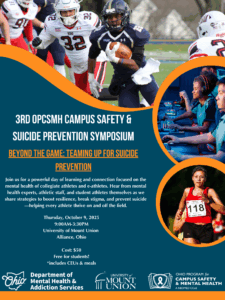
Our mission at the OPCSMH is to serve as a resource center promoting a comprehensive approach to suicide prevention and mental health promotion at college campuses across the state of Ohio through collaboration with community stakeholders to prevent campus suicide and create a culture of care on Ohio campuses.
In line with our mission, this symposium will provide education on evidence-based, culturally relevant resources related to campus suicide prevention and mental health promotion through presentations from industry experts and creating and fostering a safe space for discussion of mental health and campus safety topics, including but not limited to mental health stigma, suicide risk, and substance misuse.
Symposium objectives
- Identify how college and university athletic departments can collaborate with the broader campus-community to leverage the promotion of student athlete well-being, mental health awareness, and suicide prevention efforts.
- Identify opportunities for students, faculty, and staff to engage in student athlete-focused programming that addresses stigma and barriers to accessing mental health care.
- Promote best practices, resources, and help-seeking options that target suicide prevention, mental health, and resilience for all collegiate athletes in Ohio’s campus-communities.
Presentations
Morning Keynote: From Sidelines to Lifelines: The Mental Health Crisis and Suicide in Athletics

Presenter: Quentin Shambley, MSN, RN, PMHNP-BC, The Hidden Opponent
Sports are often associated with prestige, excitement, and the pride of competition, offering athletes a unique sense of identity, connection, and purpose. Yet behind the scenes, many face intense pressures — from performance expectations and injury setbacks to identity struggles and isolation — that can quietly lead to depression, crisis, and, in some tragic cases, suicide. In this powerful and informative session, Quentin Shambley, The Hidden Opponent Clinical Advisory Board Member and psychiatric nurse practitioner, combines professional insight with personal experience as a former Division I football player to explore the unique mental health challenges athletes face. Through both clinical education and personal storytelling, Quentin equips athletes, coaches, healthcare professionals, and stakeholders with the knowledge, empathy, and practical tools needed to better recognize and respond to mental health struggles, ultimately fostering safer, more supportive athletic environments.
Objectives:
- Identify the signs and symptoms of depression, psychological crisis, and suicidality through real life examples as they uniquely present in athletic populations.
- Describe the cultural, systemic, and psychological barriers that contribute to underreporting and under-treatment of mental health issues among athletes.
- Apply evidence-informed strategies for early identification, intervention, personal engagement, and referral of athletes at risk, with consideration for the roles of coaches, healthcare professionals, and institutional stakeholders.
Afternoon Keynote: Resilience Intervention as Suicide Prevention
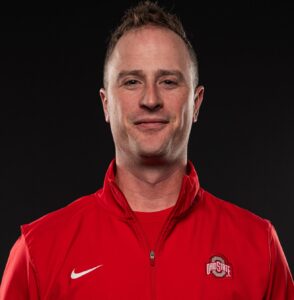
Presenter: Jamey Houle, PhD, Lead Sport Psychologist, The Ohio State University
Student-athlete mental health concerns are on the rise and the pressure to perform has not been higher. The complex intersection of student-athlete mental health, performance, and academic demands has unfortunately led to student-athlete death by suicide. The following program will discuss the suicide prevention strategy of resilience development within an athletic department. Scarlet and Grit, a seven-week elite resilience training program will be discussed as a proposed option to address suicide prevention within an athletic department. Specifically, the three-evidence based positive coping strategies of cognitive behavioral treatments, positive psychology, and mindfulness will be discussed.
Objectives:
- Attendees will be able to list three healthy coping strategies for adverse situations to increase resilience
- Attendees will be able to identify the relationship between resilience and suicidality
- Attendees will be able define resilience
Panel: Game Changers: Athletic Staff as Catalysts for Mental Wellness
Moderator:
David G. Nardecchia, M.Ed., LPCC, Assistant Professor, Cuyahoga Community College
Panelists:
Kelly Tilley, MA, LPCC-s, CMPC, Athletic Embedded Mental Health Counselor, Kent State University
Allie Robinson, MS, ATC, Athletic Trainer, University of Mount Union
Cayleb Paulino, M.Ed., Women’s Head Soccer Coach, Ashland University
Elijah Burch, LPC, Case Manager, Youngstown State University
Behind every successful student-athlete is a team of dedicated professionals working to support not only performance—but also well-being. This panel brings together a dynamic group of collegiate athletic professionals to explore the evolving role of athletic staff as mentors and mental health advocates. Panelists will share practical strategies for incorporating mental wellness and resiliency into training, fostering athlete identity beyond sport, and creating a culture where seeking help is seen as a strength. Whether you’re on the sidelines, in the training room, or advising in the classroom, this conversation will highlight how every touchpoint with a student-athlete is an opportunity to be a catalyst for change.
Objectives:
- Educate participants about best practices in suicide prevention, stigma reduction and student-athlete well-being
- Increase awareness and understanding of the unique mental health challenges faced by student-athletes.
- Encourage a culture of openness and proactive support within collegiate athletic programs to promote long-term resilience and well-being.
Panel: “Time Out”: Student Athletes on Mental Health
Moderator:
Kemp Boyd, Executive Director, Love Akron
Panelists:
McKayla Dunkle, Basketball, Mount Union
Lela Plouse, Lacrosse, Malone University
Sarah Watson, Soccer, Ashland University
Nicholas Barber, Retired Athlete, Ashland University
Strength in sports isn’t just about performance—it also means knowing when to take a time out. Time Out creates space for student athletes to step off the field and speak openly about their experiences with mental health. Through sharing their lived experiences, panelists will reflect on the pressures of performance and the ongoing pursuit of balance in student-athlete life by highlighting the importance of resilience and support. This conversation amplifies the voices of those at the heart of the game—and explores how they’re shaping a healthier future in college athletics.
Who should attend?
Campus stakeholders at institutions of higher education, higher education administrators, behavioral health departments, community members, campus security and law enforcement; students, educators, counselors, social workers, coaches, athletic trainers, and others working within a higher education setting are encouraged to attend.