
Ohio Program for Campus Safety and Mental Health
Helping Ohio colleges and universities enhance suicide prevention efforts and mental health services

We want to hear from you! Do you have an idea or topic of interest that would make an impactful webinar? Let us know and we will pass it along to the OPCSMH Webinar Series planning committee!
March 2026: Get in the Game: Addressing High-Risk Gambling Among College Students
OPCSMH March 2026 Webinar Flyer
March 10th, 2026, 12:00pm-1:00pm EST
Speakers:
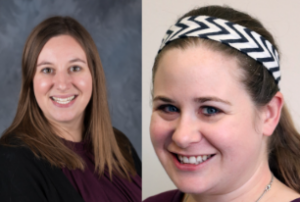
Cindy Clouner, MPH, LSW, OCPS, Managing Director, Higher Education Center for Alcohol and Drug Misuse Prevention and Recovery
Claire Spada, OCPS, ICPS, Director of Workforce Development, Problem Gambling Network of Ohio
The explosion of online sports betting and prediction markets has led to an increase in risky gambling behaviors on campus. Students engaging in these behaviors often go under the radar and are at higher risk of co-occurring disorders. It is critical campuses understand the changing landscape and are prepared to support students. Join Claire Spada with Problem Gambling Network of Ohio and Cindy Clouner from the Higher Education Center for Alcohol and Drug Misuse Prevention and Recovery as they explore the current gambling landscape and its trends, discuss the relationship between high-risk gambling and other behavioral health concerns like alcohol misuse and suicide, and identify strategies to integrate gambling work into existing campus efforts across the continuum.
Webinar Objectives:
- Describe the current gambling landscape, including gambling activities and policy changes that have led to an increase in problematic gambling behaviors among college students
- Discuss current trends in gambling behaviors among college students and the intersections between gambling, mental health, suicidality, and substance use
- Identify 3 strategies to integrate problem gambling work into existing prevention and intervention efforts on campus
February 2026: Addressing Graduate Student Mental Health and Burnout
OPCSMH February 2026 Webinar Flyer
February 25th, 2026, 12:00pm-1:00pm EST
Speaker:
Tarin Karunagoda, MSc, Knowledge and Research Lead, The Centre for Innovation in Campus Mental Health
Graduate schooling can be an exciting academic journey, but also a challenging experience for most students. Up to 50% of graduate students have experienced a negative impact on their mental well-being, whether it is stress, anxiety, burnout or depression. In this presentation, we will discuss the current state of mental health among graduate students, the many factors that may contribute to it and specifically focus on addressing burnout. Attendees will leave with some concrete tips on burnout recovery and other wellness strategies that graduate students can embed into their lives.
Webinar Objectives:
- Understand the unique challenges graduate students face that impacts their mental wellbeing.
- Learn how to manage the things within our control, especially pertaining to burnout, and encourage burnout recovery.
January 2026: The Digital Dilemma: Exploring Student Loneliness, Mental Health, and Wellbeing in the Age of Social Media and AI

OPCSMH January 2026 Webinar Flyer
January 27th, 2026, 12:00pm-1:00pm EST
Speaker:
Nick Pinkerton, PsyD, Associate Dean of Counseling Services and Wellbeing, Southern Connecticut State University
As Artificial Intelligence accelerates, human wellbeing is falling behind. In this transformative session, Dr. Nick Pinkerton explores “The Great Divergence”—the widening gap between our technological capabilities and our mental health and flourishing. Beyond simple screen-time warnings, this presentation offers a roadmap to reclaiming connection and purpose, empowering participants to become “Cultural Architects” who build human-first zones in a digital-first world.
Webinar Objectives
- Analyze the “Great Divergence” between technological advancement and human flourishing, specifically identifying how the “Attention,” “Attachment,” and “Automation” economies impact student mental health.
- Differentiate between the psychological fallout of “First Contact” (Social Media/Curation AI) and the emerging existential challenges posed by “Second Contact” (Generative AI/Companions).
- Apply the “Cultural Architect” framework to design actionable personal and community boundaries that prioritize authentic human connection over digital convenience.
november 2025: Beyond the Syllabus: How Faculty Can Support Student Mental Health in Large Classes and Beyond

OPCSMH November 2025 Webinar Flyer
November 24th, 2025, 12:00pm-1:00pm EST
Speakers:
Kate Gawlik, DNP, APRN-CNP, FAAN, FAANP, FNAP, The Ohio State University
Alice Teall, DNP, APRN-CNP, FAANP, FNAP, Kenyon College
Janet Janson, MPH, ACC, CHES, University of Michigan
Elizabeth Levesque, PhD, University of Michigan
Faculty play a critical role in student well-being – yet supporting mental health can feel especially challenging in large, high-enrollment courses. This webinar brings together faculty and campus partners to share realistic, research-informed strategies for promoting mental health and fostering connection at scale. Panelists will explore how thoughtful course design can reduce distress and help faculty identify and respond to early signs of student concern – all while maintaining healthy boundaries and academic integrity. Join us for practical guidance on how institutions of all sizes can embed student mental health support into the classroom experience in scalable, sustainable ways.
Webinar Objectives
- Identify at least two common barriers and opportunities related to supporting student mental health in large-class or high-enrollment settings.
- Apply at least two research-informed, scalable practices that foster connection, belonging, and support in large or high-demand courses.
- Recognize early indicators of student distress and understand appropriate referral and response strategies within faculty roles and boundaries.
September 2025: Words of Impact: How to Safely Communicate for Suicide Prevention


OPCSMH September 2025 Webinar Flyer
September 23rd, 2025, 12:00pm-1:00pm EST
Speakers:
Kristin Bruns, PhD, LPCC, Assistant Professor, Kent State University
Annaleise Fisher, Ed.S, LPCC-S, Suicide Prevention and Health Promotion Manager, Northeast Ohio Medical University
In the critical field of suicide prevention, responsible communication is a life-saving tool. This webinar provides a practical guide for safely and effectively communicating about suicide to help prevent harm and promote hope. Tailored for higher education faculty, staff, students, and leaders, the session will teach you how to apply a responsible reporting checklist to ensure effective and safe communication and reporting for suicide prevention. The session will discuss suicide as a public health issue, review the use of appropriate language, how to apply resources, and emphasize the inclusion of messages to promote hope and help-seeking. The webinar will apply practical strategies that can be applied immediately to your role in the campus-community.
Webinar Objectives
- Identify reasons why best practices recommendations are critical for safe and effective reporting and messaging for suicide prevention
- Recognize examples of harmful versus helpful reporting practices in news and social media
- Apply best practice guidelines for safe and effective reporting and messaging for suicide prevention
To receive continuing education credit, you must create an account at eeds.com and login within 24 hours and complete the evaluation survey after the webinar. Each webinar equals one (1) CE unit and there is no limit to how many you can obtain. See the EEDs guide below to help you navigate the site. Continuing education credits are not retroactive after 24 hours so save the EEDs site as a favorite on your device to quickly submit the survey immediately following the webinar.
Need assistance with EEDs and obtaining your CEs? Download this instructional guide.
View past webinars and webinar materials at the Ohio Program for Campus Safety and Mental Health Archives.
We sponsor webinars and trainings on a variety of topics of interest to the campus community. We have held trainings on Behavioral Intervention Teams, Violence Prevention and Best Practices in Postvention at several locations across the state.
Contact US
Ohio Program for Campus Safety & Mental Health
A NEOMED Coordinating Center of Excellence