Developing NEOMED’s newest college

The Bitonte College of Dentistry will help fill a gap in Ohio’s workforce.

Ask Frank Beck, D.D.S., FAAHD, to explain why Northeast Ohio Medical University is opening a dental college, and he’ll tell you: “The number one unmet health care need of the citizens of Ohio is dental health care. It has been the number one for the past 25 years.”

The need is so great that Ohioans often present in hospital emergency departments for non-emergent dental care.

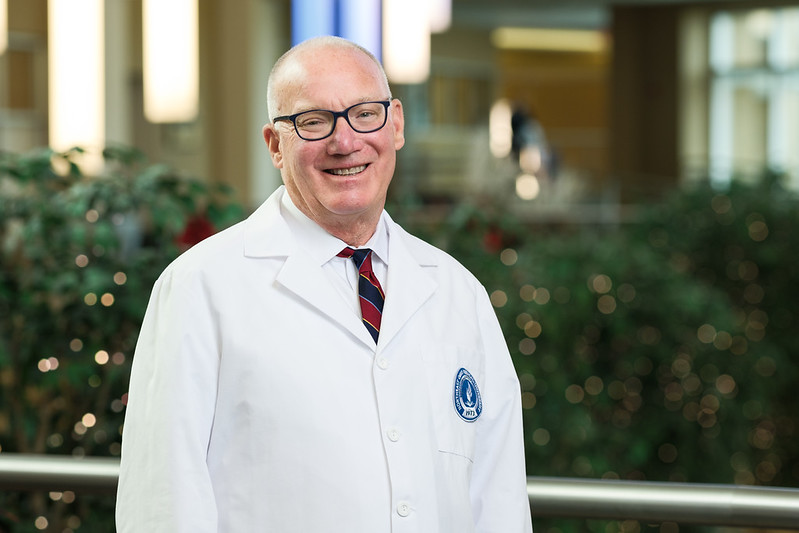
Dr. Frank Beck in a white coat.

Frank Beck, D.D.S., FAAHD, inaugural dean of the Bitonte College of Dentistry.

“In fact, in the state of Ohio, out of the top 20 non-emergent conditions in a hospital emergency department, numbers 1, 3 and 12 are all dental,” Dr. Beck explained. “The challenge is that you have individuals in acute pain with infections and abscesses and they are discharged with an antibiotic and a painkiller, with the discharge instructions to find a dentist. Well, if they had a dentist, it is more than likely they wouldn’t have been sitting there in the emergency room.”

While the need for better access to dental care is great, there is a shortage of dentists in the state to fill that need. Dr. Beck notes, Ohio is currently more than 600 dentists short.

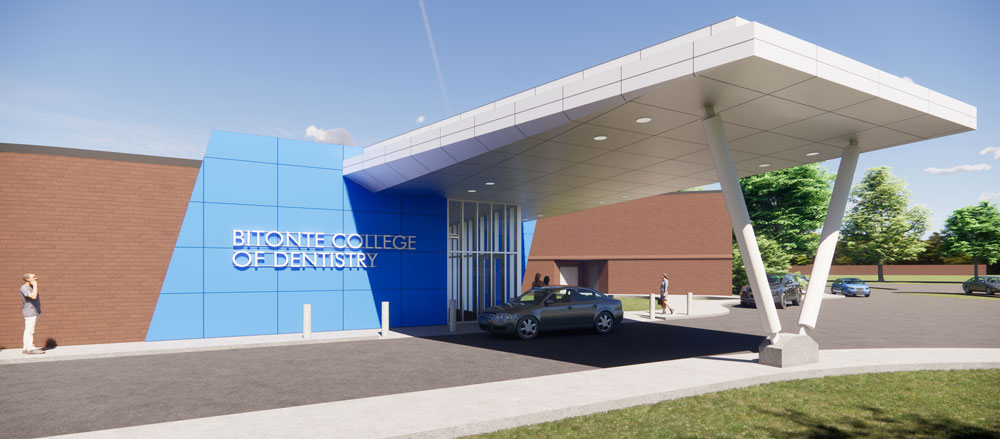
Architectural rendering of the entrance to the Bitonte College of Dentistry.

Building a Dental School

Dr. Beck is the inaugural dean of the Bitonte College of Dentistry, which received initial accreditation by the Commission on Dental Accreditation (CODA) in August 2024. An impressive accomplishment for Dr. Beck and his team considering the decision to pursue a college of dentistry was made by the NEOMED Board of Trustees just two years earlier. The College is the third dental school in the state — the others are at the Ohio State University and Case Western Reserve University — and the first public dental school in northern Ohio.

The College was named in recognition of a $10-million commitment from the Dr. Dominic A. and Helen M. Bitonte Family Foundation.

Following an invitation from NEOMED President John T. Langell, M.D., Ph.D., M.P.H., M.B.A., Dr. Beck joined an external advisory board in 2021 to investigate the feasibility of developing a dental school at NEOMED. He took a leadership role in bringing together content experts with a range of knowledge from facilities to curriculum to funding to clinical training. The group also included members with ties to CODA, as well as the Ohio State Dental Board, the Ohio Department of Health (ODH), the Ohio Association of Community Health Centers (OACHC) and the Ohio Dental Association (ODA).

The next step was identifying stakeholders. According to Dr. Beck, the advisory board decided, “let’s identify those not only that are in support, but those that might be in opposition.”

Surprisingly, it was organized dentistry that was opposed to the creation of a new dental college in the state. Dr. Beck was prepared for the pushback, though, having been counseled by deans of new dental schools across the country.

“I asked them, what were their biggest obstacles, what was their biggest opposition? And unequivocally it was organized dentistry at the state level. I wanted to understand that opposition. We created an environment of absolute transparency and direct communication,” he shared. “We hosted the Ohio Dental Association here on campus to understand their concerns and their opposition and to share with them our plan. And I think it would be fair to say, their opposition was more from just a lack of communication with regards to the educational model we were developing.”

The ODA, ODH and OACHC continue to play important roles in the development and implementation of the Bitonte College.
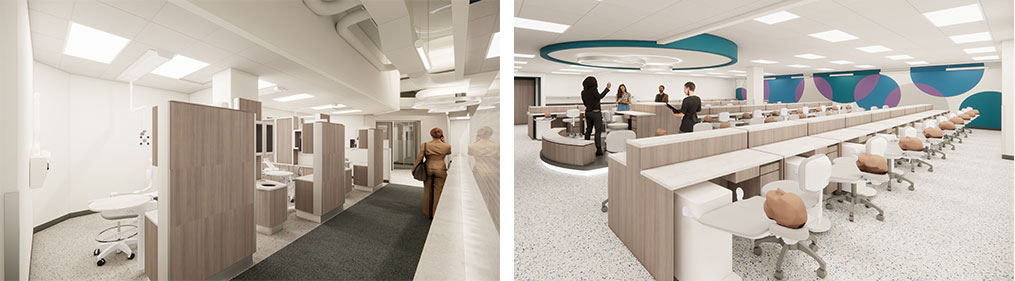
Architectural drawings of dental operatories (left) and lecture space (right).

An Accreditation Whirlwind

Once the external advisory board established the need for and feasibility  of a new dental college, work began  on achieving accreditation. First, the new College had to be approved by the Ohio Department of Higher Education (achieved June 2023), then accredited by the Higher Learning Commission (achieved in early 2024) and then through CODA (achieved August 2024).

CODA recommends a 5-year timeline for completing initial accreditation. “Dr. Langell charged our committee with getting it done in 38 months. We were able to achieve it in 34 months,” Dr. Beck shared with obvious pride.

He credits Richard Kasmer, Pharm.D., J.D., former senior vice president for  academic affairs and retired dean of  the College of Pharmacy, with helping to make that happen. Dr. Kasmer led NEOMED through its 10-year re-accreditation with HLC and was familiar with the process. Dr. Beck hired him to serve as special assistant to the dean.

Kristin Z. Victoroff, D.D.S., Ph.D., associate dean for education and academic affairs for the Bitonte College, expertly led curriculum development. Jean Fox, D.D.S., associate dean for clinical affairs, made sure a plan was in place for the clinical training of future dentists.

Once initial accreditation was achieved, recruitment began in earnest. Within the first couple months, more than 1,800 applications were received from aspiring dental students vying for the 50 available seats in the inaugural class.

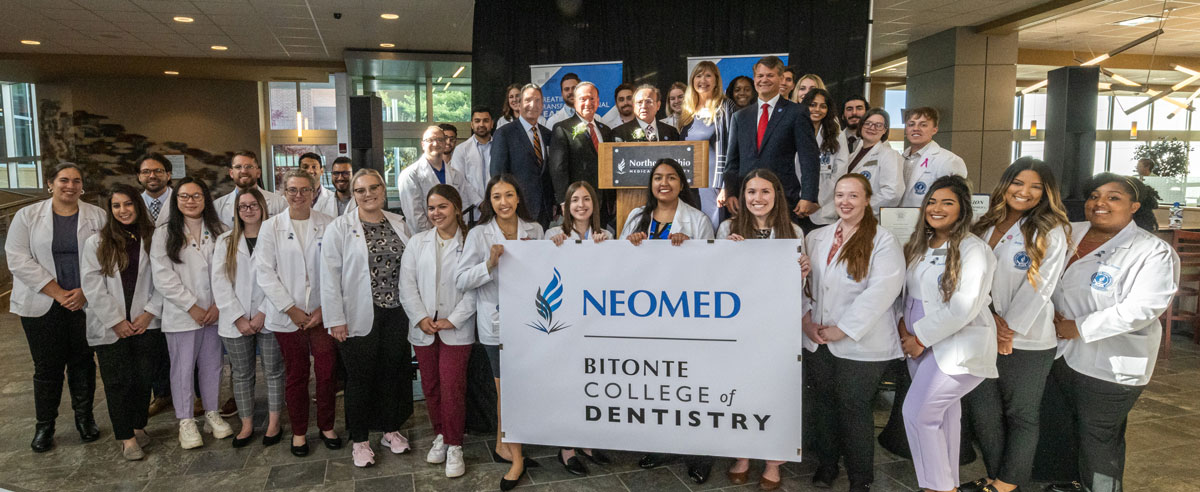
Faculty, staff and students gathered to celebrate the launch of the Bitonte College of Dentistry.

Serving the Underserved

Like the University as a whole, one of the goals of the Bitonte College of Dentistry is to train students who will stay in Ohio to practice.

Ohio has 176 health professional shortage areas for dentistry. Dental deserts exist in Ohio’s rural and urban counties, which have a higher concentration of poverty and patients with complex needs.

Students’ training will focus on working with those underserved groups. There will also be a heavy emphasis on practicing dentistry with individuals with intellectual or developmental disabilities.

“If I’m a graduate dentist who’s never seen a patient on the autism spectrum and don’t really understand their medical needs, their psychosocial or emotional needs, I’m not going to be a very good provider,” Dr. Beck illustrated. “I’m either going to attempt to provide for them in a very unproductive manner or I’m just going to say no. By giving students this training starting in year one, they’ll be better prepared to work with this very underserved population.”

During years three and four, students will divide their clinical training between on-site and off-site opportunities. They will spend half of the time working with clinical partners across the state including hospitals, private practice clinics, federally qualified health centers and other partners. The other half of their time will be spent in the Bitonte College’s state-of-the-art dental clinic.

“We’re hoping to create a career pipeline of experiences, and that way better address the maldistribution of individuals serving the state,” Dr. Beck said. “At the same time, students get to see role models who are working in these locations. And that’s really powerful.”

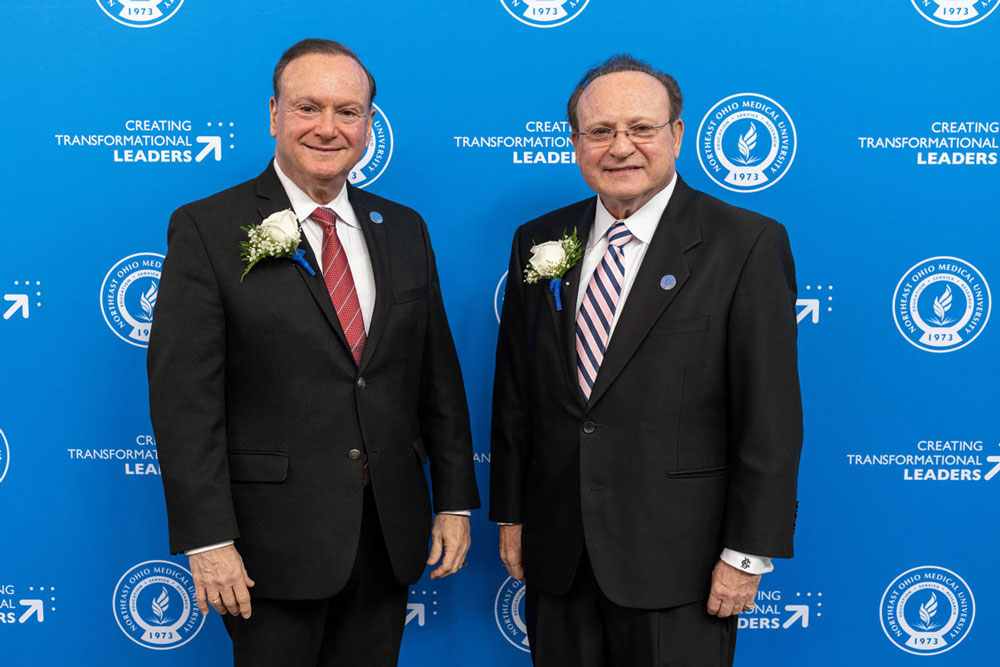
Brothers David Bitonte, D.O. (left), and A. Gary Bitonte, M.D., championed a $10-million commitment from the Dr. Dominic A. and Helen M. Bitonte Family Foundation to develop the Bitonte College of Dentistry, which is named in memory of their parents.

Interdisciplinary Opportunities

Dr. Beck is enthusiastic about what he calls the Bitonte College’s “multi-directional, interprofessional, collaborative education model.”

“Students will spend a tremendous amount of their first year in didactic studies, which will share facilities, faculty and foundational science experiences with the colleges of Medicine, Pharmacy and Graduate Studies,” he said. “We want to eliminate those silos that have traditionally existed in health care education.”

The focus on interdisciplinary education opens up opportunities for all NEOMED students, not just those in the Bitonte College. For instance, medical students will be able to take a course in emergency dentistry.

They will also be able to train in the new dental clinic that is being developed on campus.

“The anesthesia students will be training here, the pharmacy students, medical students, public health students. We are creating interdisciplinary rotations. If we have a patient in the dental clinic, there may be a pharmacy student rotating so that we can share knowledge, resources and expertise about pharmacological interventions, if needed. Conversely, the pharmacy student will be viewing the dental patient through a different lens as well,” Dr. Beck noted. “So that will enable us to graduate transformational leaders — individuals who were not educated in silos. The outcomes will be better patient safety, better patient care and, most importantly, less utilization of emergent care centers for non-emergent services.”

Advice for Future Deans

What advice would Dr. Beck give to someone who is tasked with leading a new dental college?

“Surround yourself with an outstanding team of content experts who are passionate, committed and enthusiastic, empower them, and just stay the heck out of their way,” he said.

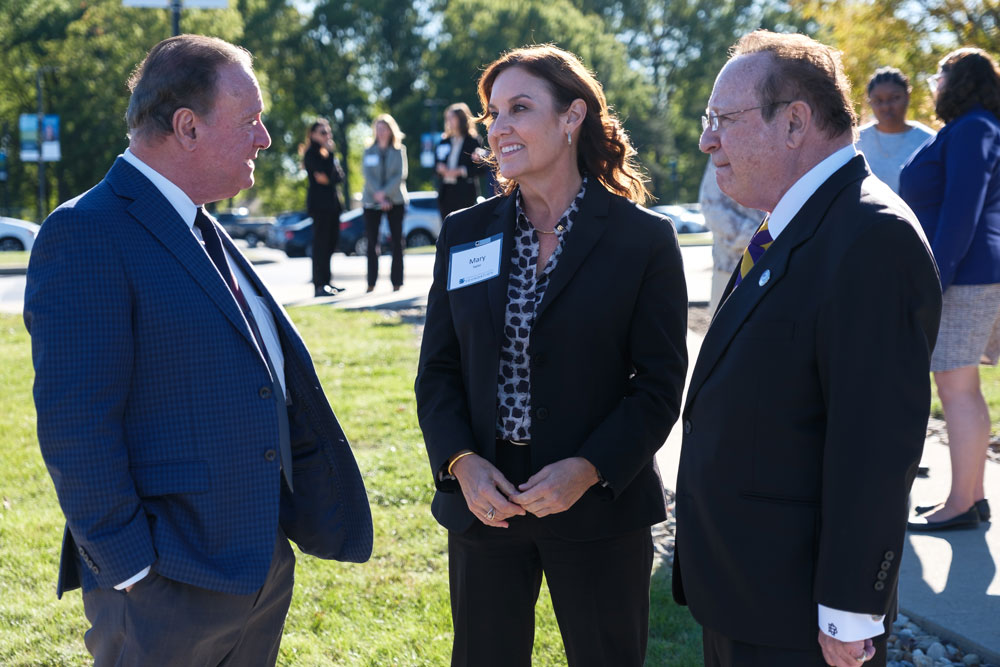
David Bitonte, D.O., Mary Taylor, senior vice president of operations and finance, and Gary Bitonte, M.D.

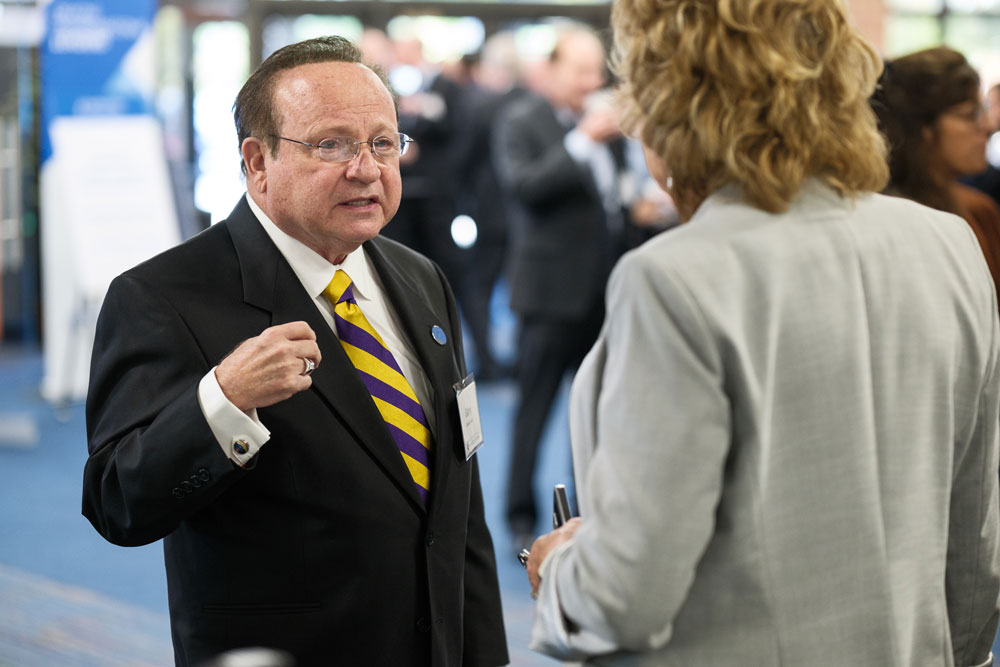
Dr. Gary Bitonte with then-State Rep. Gail Pavliga.

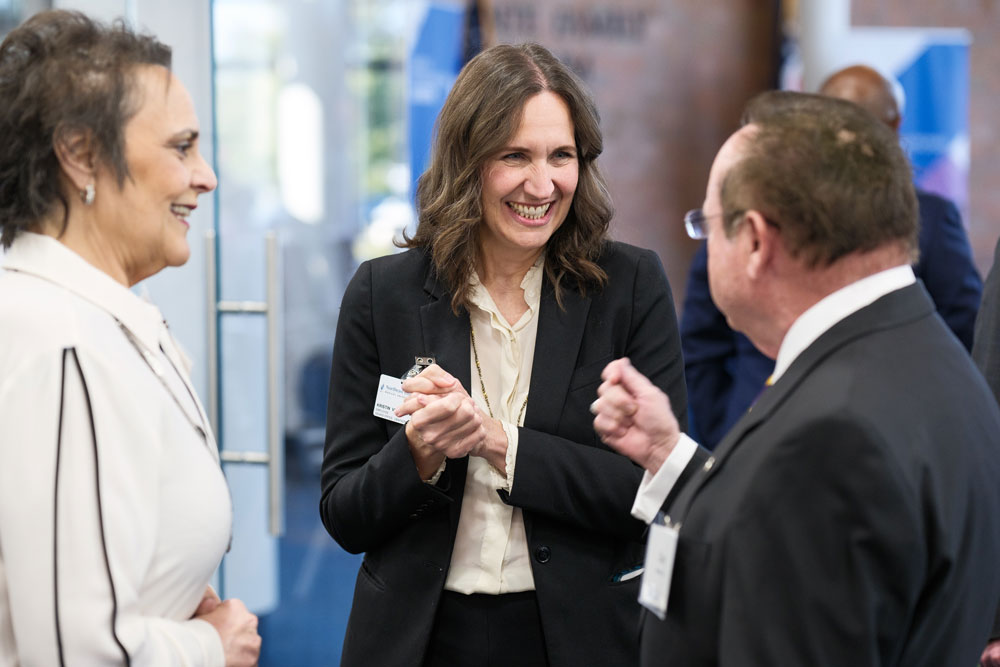
Jean Fox, D.D.S., Kristin Victoroff, D.D.S., Ph.D., and Dr. Gary Bitonte.

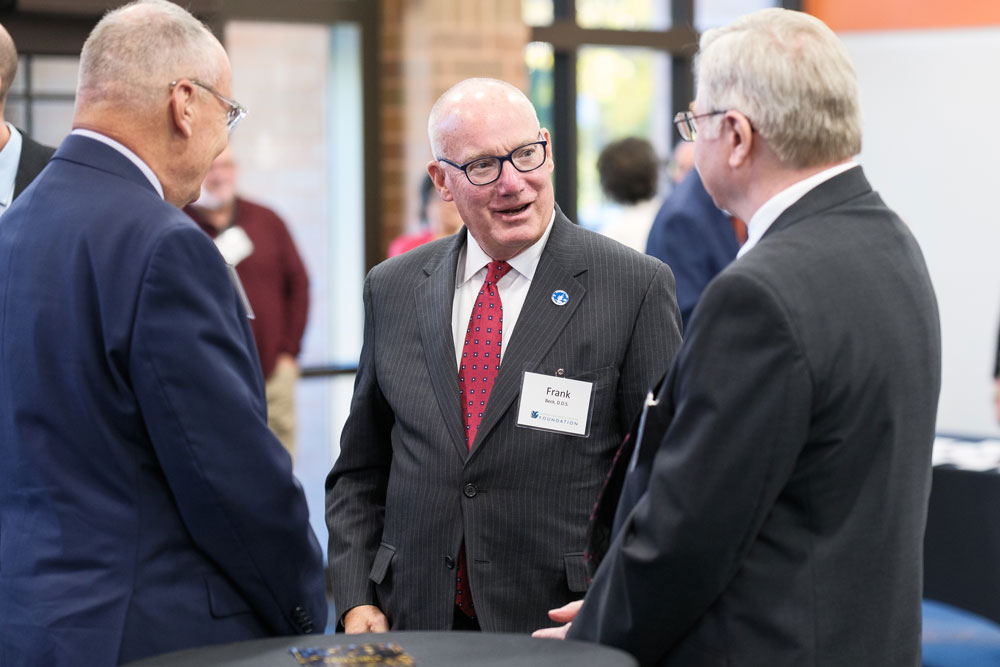
Frank Beck, D.D.S., (center) with guests.

President John Langell.

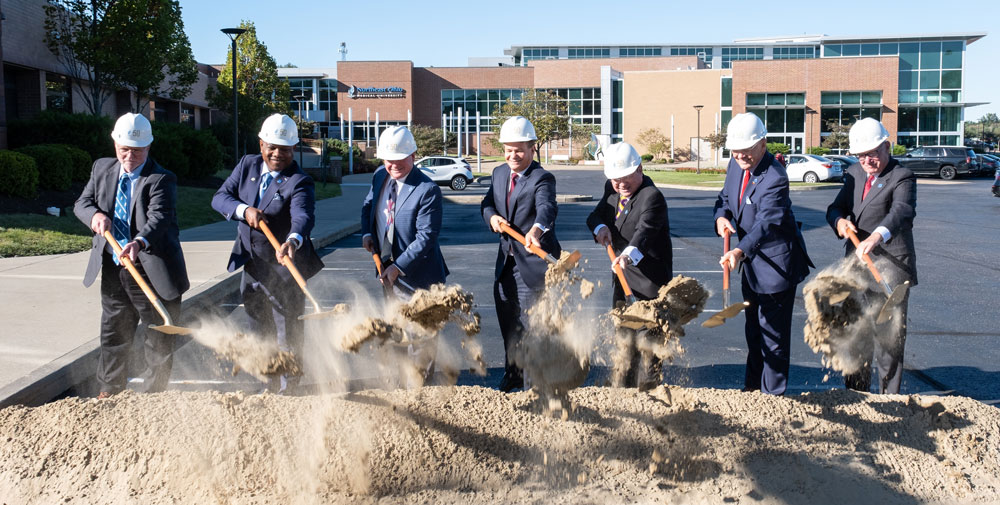
NEOMED trustees and senior leadership broke ground on the new college.

Ignite Magazine

Marketing and Communications
marcom@380cebbe0d.nxcli.io

Inside Ignite

Ignite home page