Moving beyond one-size-fits-all prescriptions

One-size-fits-all rarely fits anyone well. That’s true in clothing design and it’s also true in pharmaceuticals and their clinical application.

“Currently, we have a very archaic model where we assess medication doses for patients based on age, weight and other parameters that just group people together. Those have nothing to do with different ways that people will actually process medication when they take it,” said Moses Oyewumi, Ph.D., professor and chair of pharmaceutical sciences at Northeast Ohio Medical University. “We just create this broad bucket and say, if someone is at this age, at this weight, the dose will be that.”
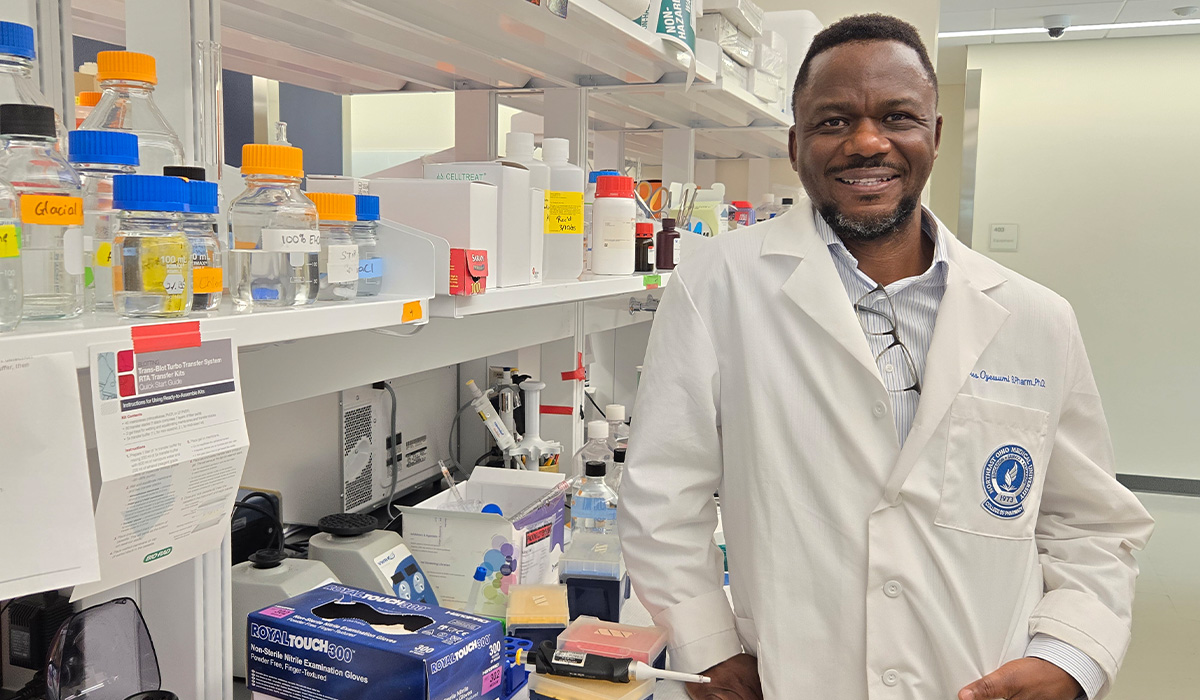
Dr. Moses Oyewumi in the lab

Moses Oyewumi, Ph.D., in the lab. Photos: Staff.

Dr. Oyewumi believes precision medicine offers a better solution that will result in better outcomes for patients.

“When a patient takes a medication, before it can be effective, the body will process that medication. How much can get to the blood? How much will be metabolized?” Everyone’s body will react differently to a medication based on their genes. Because of that, said Dr. Oyewumi, “the actual dose is not really what the patient is taking. The actual dose is what makes it to the point where the drug can act.”

That’s where precision medicine comes in.

“Currently, we have a very archaic model where we assess medication doses for patients based on age, weight and other parameters that just group people together. Those have nothing to do with different ways that people will actually process medication when they take it.”

– Moses Oyewumi, Ph.D.

“In layman’s terms, precision medicine is the ability to customize medication or tailor it to individual needs,” explained Dr. Oyewumi.

It is a product of pharmacogenomics, the study of the role of the genome in drug response as it pertains to variations in how the body absorbs, distributes, metabolizes, retains and eliminates drugs, as well as how drugs act on targeted sites in the body.

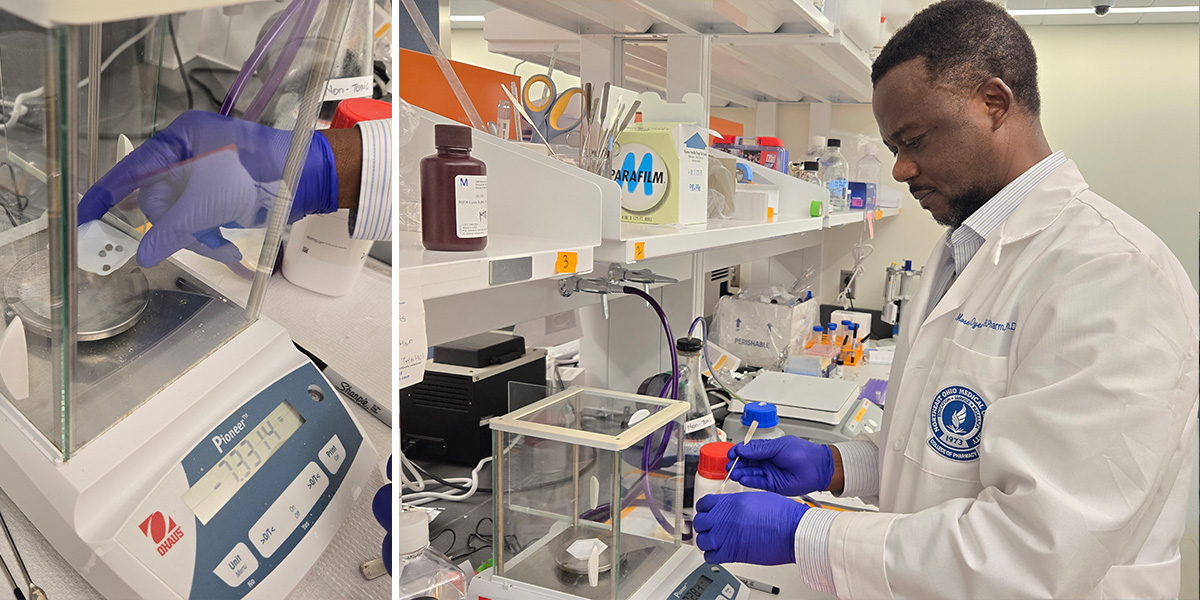
Moses Oyewumi in a pharmaceutical sciences lab

Moses Oyewumi, Ph.D., works in the lab.

The Right Dose of the Right Medication

“We are so different genetically with the way we relate with drugs. Pharmacogenomics helps us see how much of a drug will make it to blood circulation, how much will be metabolized, how much the body will push out,” Dr. Oyewumi explained. “If we don’t design the dose based on those things, we may be giving the patient too much drug or too little drug.”

He offered pain management as an example of an area where precision medicine could have a big impact. If someone is prescribed an opioid at too low a dose, their pain will not be managed properly. If the dose is too high, it could lead to side effects and addiction.

“This is the overall goal of precision medicine, to know some of the individualistic parameters that will affect the way medication will be effective, that affect how much side effects there are. And then ensure the overall safety of the patient so that they don’t take too much or too little, and they just get the medication that they need,” he said.

Precision medicine can also show which medication would be the most appropriate for a particular patient.

Watch: Xinwen Wang, Ph.D., discusses factors that may impact how different people react to the same medications.

Challenges to Adoption

While precision medicine can help ensure that patients receive the right medication in the right dose, there are challenges to widespread implementation.

Mass production of pharmaceuticals, especially in tablet form, does not lend itself to precision medicine. For instance, if tablets are mass produced with a dose of 10 milligrams of an active ingredient, but a particular patient needs 7.5 milligrams, results will not be optimal.

“That’s a major challenge because traditional large scale medicine manufacturing is a big business,” said Dr. Oyewumi. “If we are talking of customization for the patients, there’s not much that can be done. When medicines are mass produced, we have the limitation to be able to do that.”

Another challenge is the amount of time it can take to create customized medication. Dr. Oyewumi’s lab is exploring medication delivery systems and looking for ways to improve delivery using 3D printing and other technologies, in effect moving manufacturing to the point of care.

“We are looking at the situation down the road where it would be possible to use genetic components to know the dose. And when you know that you can customize that dose for the patient,” Dr. Oyewumi said. A simple blood test would provide much of the information needed to customize a dose, such as assessing the amount of the metabolizing enzymes present that will impact the effectiveness of the drug. “I believe that’s the way to go, because we really need to give way to a newer method that will be less wasteful, that will not expose the patient to unnecessary medication but that will be effective,” he said.

Watch: Xinwen Wang, Ph.D., discusses pharmacogenomics and neurodegenerative diseases, like Parkinson’s disease.

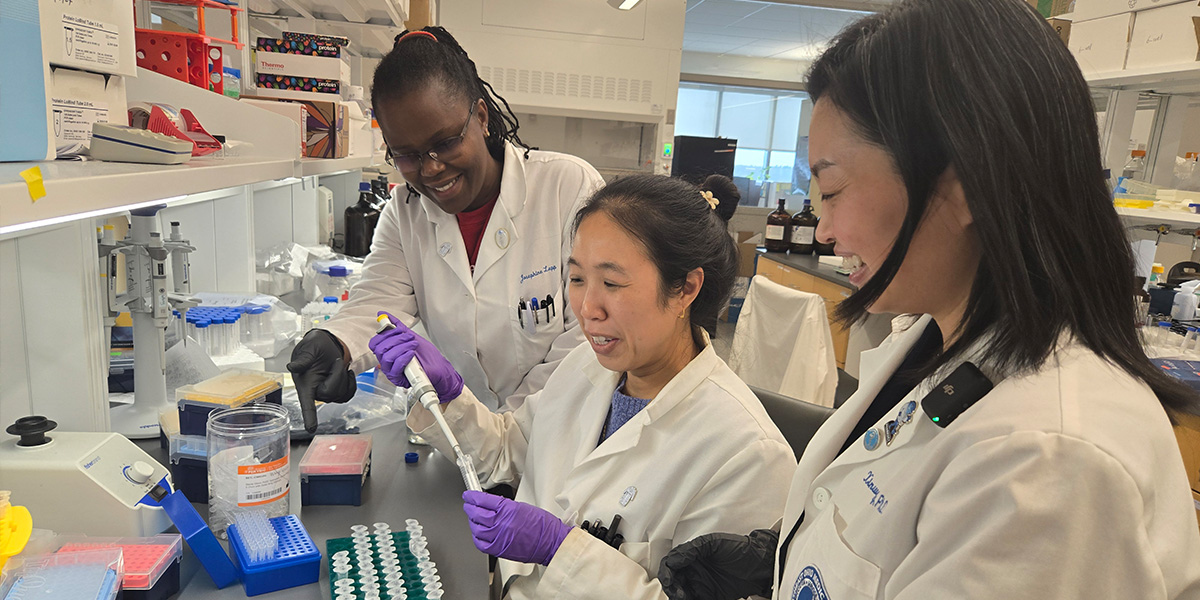
Dr. Oyewumi referred to the work of Xinwen Wang, Ph.D., his colleague in the department of pharmaceutical sciences, who is working to identify both genetic and non-genetic factors that contribute to interindividual variability in disease progression and drug response. Findings from such research will have great impact on establishing safe and effective application of medications in clinical settings.

Three women in lab coats in a pharmaceutical sciences lab

Xinwen Wang, Ph.D. (right) in the lab with colleagues.

Ignite Magazine

Marketing and Communications
marcom@380cebbe0d.nxcli.io

Inside Ignite

Ignite home page