Open positions in this lab
We are currently looking for highly motivated graduate students that have interests in the visual system, neurodegenerative disease and/or injury. If you would like additional information or have your own related interests you would like to explore, do not hesitate to contact us. Our graduate students can enter through NEOMEDs premier graduate program, Basic and Translational Biomedicine.
Select publications
Liu X, Xin DE, Zhong X, et al. (2024). Small-molecule-induced epigenetic rejuvenation promotes SREBP condensation and overcomes barriers to CNS myelin regeneration. Cell. 187(10):2465-2484.e22. doi:10.1016/j.cell.2024.04.005
Smith MA, McNinch NL, Chaney D, et al. (2024). Reduced Concussion Symptom Burden in Early Adolescent Athletes Using a Head-Neck Cooling Device. Clin J Sport Med. 34(3):247-255. doi:10.1097/JSM.0000000000001198
Frame G, Schuller A, Smith MA, Crish SD, Dengler-Crish CM (2022). Alterations in Retinal Signaling Across Age and Sex in 3xTg Alzheimer’s Disease Mice. J Alzheimers Dis. 88(2):471-492. doi:10.3233/JAD-220016
Smith MA, Waugh DA, McBurney DL, et al. (2021) A comparative analysis of cone photoreceptor morphology in bowhead and beluga whales. J Comp Neurol. 529(9):2376-2390. doi:10.1002/cne.25101
Amirmokhtari N, Foresi BD, Dewan SS, Bouhenni RA, Smith MA (2021). Absence of Cytochrome P450-1b1 Increases Susceptibility of Pressure-Induced Axonopathy in the Murine Retinal Projection. Front Cell Dev Biol. 9:636321. doi:10.3389/fcell.2021.636321
Smith MA, Plyler ES, Dengler-Crish CM, Meier J, Crish SD (2018). Nodes of Ranvier in Glaucoma. Neuroscience. 2018;390:104-118. doi:10.1016/j.neuroscience.2018.08.016
Harun-Or-Rashid M., Pappenhagen N, Palmer PG, Smith MA, Gevorgyan V, Wilson GN, Crish SD, Inman DM (2018). Structural and Functional Rescue of Chronic Metabolically Stressed Optic Nerves through Respiration. Journal of Neuroscience 8(22): 5122-5139. PMID: 29760184
Smith MA, Xia CZ, Dengler-Crish CM, Fening KM, Inman DM, Schofield BR, Crish SD (2016). Persistence of intact retinal ganglion cells terminals after axonal transport loss in the DBA/2J mouse model of glaucoma. Journal of Comparative Neurology. 524(17):3503-3517. PMID: 27072596.


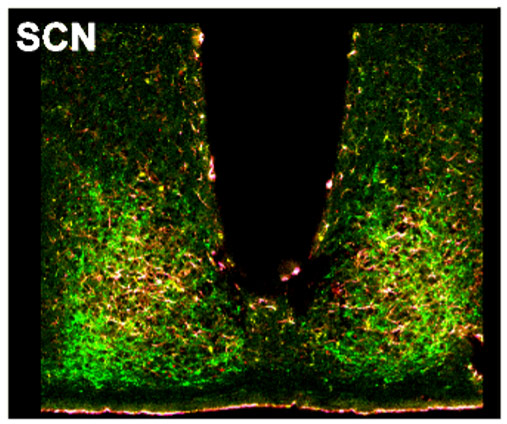
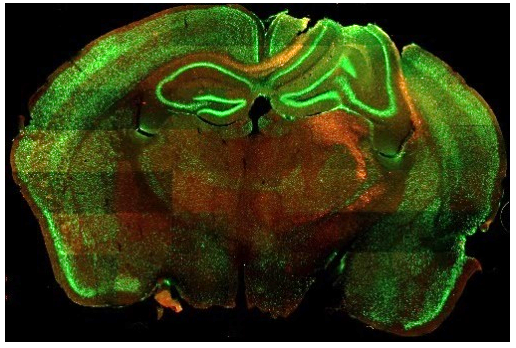 Impact of Brain Injury on the Visual System. We are investigating how pre-degenerative injury mechanisms alter image forming and non-image forming retina-brain circuits. Our primary objective is to better understand which visual system cell types and circuits are most vulnerable to injury.
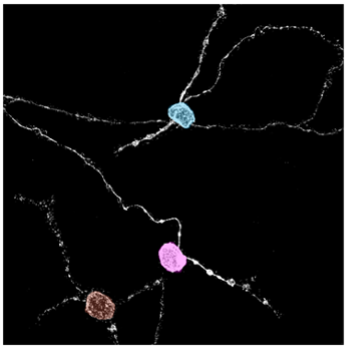 Role of Intrinsically Photosensitive Retinal Ganglion Cells (ipRGCs) in neurodegenerative disease and injury. We are exploring the role of a subset of retinal neurons, ipRGCs, in traumatic brain injury (TBI) and Alzheimer’s disease models. We hypothesize that alternations to these unique cells are likely responsible in part for the mix of vision and vision influenced symptoms commonly experienced by patients with these neurodegenerative conditions.
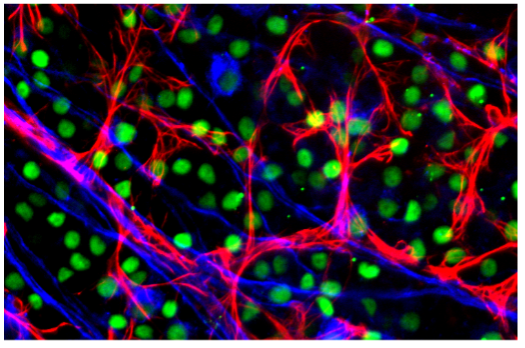 Structural & Functional Deficits in Glaucoma. To examine the role and mechanism of axonal dysfunction that can compromise retinal-brain communication, and hence vision in glaucoma. These include abnormalities in axonal caliber and defects in nodes of Ranvier. The overall objective of this project is to identify where dysfunction first occurs in RGCs and their projection.