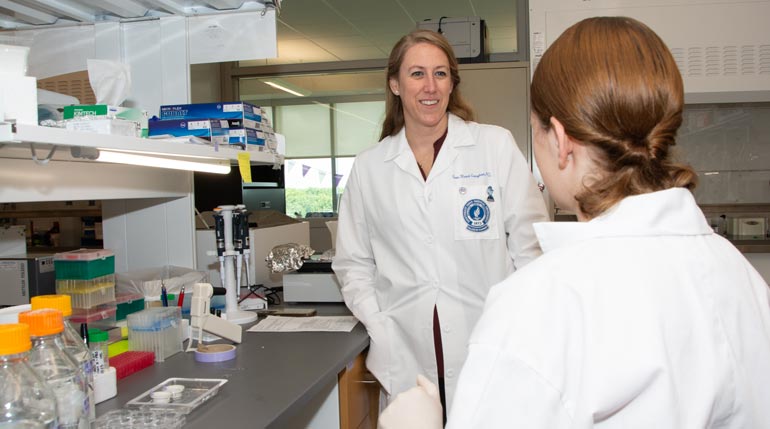
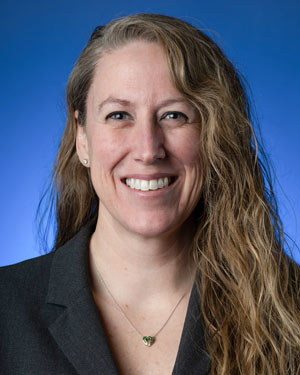
Research focus of the Reed Lab
The Reed laboratory focuses on the inflammatory response in the brain during Alzheimer’s disease (AD). Our work is based on a few important observations in humans:
- Brain inflammation accompanies the hallmark amyloid plaque deposits, neurofibrillary tau tangles, and neuron loss of AD.
- Many genes associated with AD have important immune functions.
- Women make up about two-thirds of AD patients in the US.
- There are differences in the immune systems of men and women.
We focus on how the immune system differences between men and women contribute to the different disease onset and trajectory. We use mice to model AD and to study specific immune cells in the course of disease.
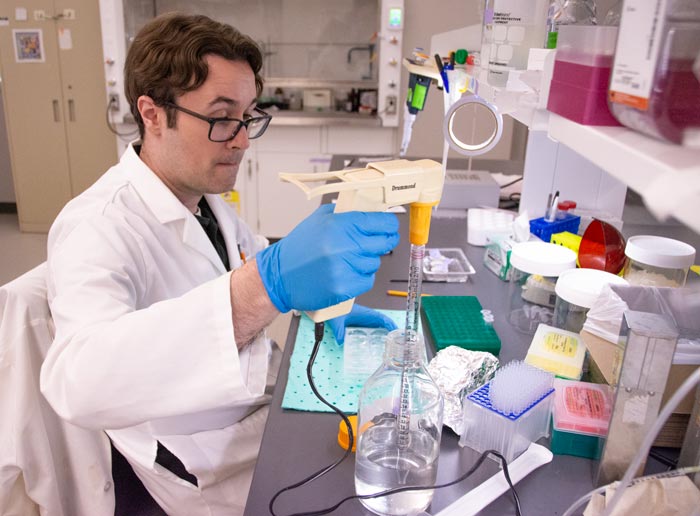
Current work
Project 1
Delineate the relative contributions of the sex chromosomes and circulating gonadal sex hormones to different inflammatory responses in the brains of AD mouse models.
Project 2
Determine whether hormone exposure during an important developmental time instructs immune cells to behave in specific ways before and during AD.
Project 3
Characterize the immune cells entering the brain and collecting at its borders, and how they communicate with each other. Compare how this may be different based on sex chromosomes and gonadal hormones, both during development and adulthood.
Open positions
See open positions in this lab on the NEOMED careers site
Select publications
Casali, BT, Reed-Geaghan EG. “Microglial function and regulation during development, homeostasis, and Alzheimer’s disease.” (2021) Cells 10 (4): 957. https://doi.org/10.3390/cells10040957.
Casali BT, MacPherson KP, Reed-Geaghan EG, Landreth GE. “Microglial depletion rapidly and reversibly alters amyloid pathology by modification of plaque compaction and morphologies.” Neurobiology of Disease 142: 104956. https://doi.org/10.1016/j.nbd.2020.104956.
Reed-Geaghan EG, Landreth GE. “Plaque-associated myeloid cells derive exclusively from resident microglia in Alzheimer’s disease.” (2020) Journal of Experimental Medicine 217 (4): e20191374. https://doi.org/10.1084/jem.20191374.
Cheng-Hathaway PJ*, Reed-Geaghan EG*, Jay TR*, Casali BT, Bemiller SM, Puntambekar SS, Karlo JC, Xu G, Ransohoff RM, Lamb BT, Landreth GE. “The Trem2 R47H variant confers a loss of TREM2 function in Alzheimer’s disease.” (2018) Molecular Neurodegeneration 13: 29. https://doi.org/10.1186/s13024-018-0262-8
*denotes these authors contributed equally to this work
Casali BT, Reed-Geaghan EG, Landreth GE. “Nuclear receptor agonist-driven modification of inflammation and amyloid pathology enhances and sustains cognitive improvements in an AD mouse model.” (2018) Journal of Neuroinflammation 15: 43. https://doi.org/10.1186/s12974-018-1091-y
Reed-Geaghan EG, Savage JC, Hise AG, Landreth GE. “CD14 and Toll-like receptors 2 and 4 are required for fAβ-stimulated microglial activation.” (2009) J Neurosci 29:11982. https://doi.org/10.1523/jneurosci.3158-09.2009
Zelcer N, Khanlou N, Clare R, Jiang Q, Reed-Geaghan EG, Landreth GE, Vinters HV, Tontonoz P. “Attenuation of neuroinflammation and Alzheimer’s disease pathology by liver X receptors.” (2007) PNAS 104:10601. https://doi.org/10.1073/pnas.0701096104
Select collaborators
Previous lab members and what they are doing today
Summer Research Fellows
- Lydia Chlpka – medical student, expected graduation May 2025
- Heleina Dopazo – medical student, expected graduation May 2025
- Emily Marsico – medical student, expected graduation May 2024
Research elective students
- Gerald Crutchfield, Pharm.D. (2023) –
- Emmanuel Livchak, Pharm.D. (2023) – PGY1 resident, Cleveland Clinic Avon
Equipment of significance
BD FACSymphony A1 flow cytometer
Select funders
- BrightFocus Foundation
- NIA/NIH
Lab members today
- Brad Casali, PhD
Postdoctoral Fellow
- Phaedra Norrell Keller
Graduate Student
- Hannah Zuppe
Graduate Student