
Certified Anesthesiologist Assistant (CAA) Program
Hands-on training with immersive simulation technology
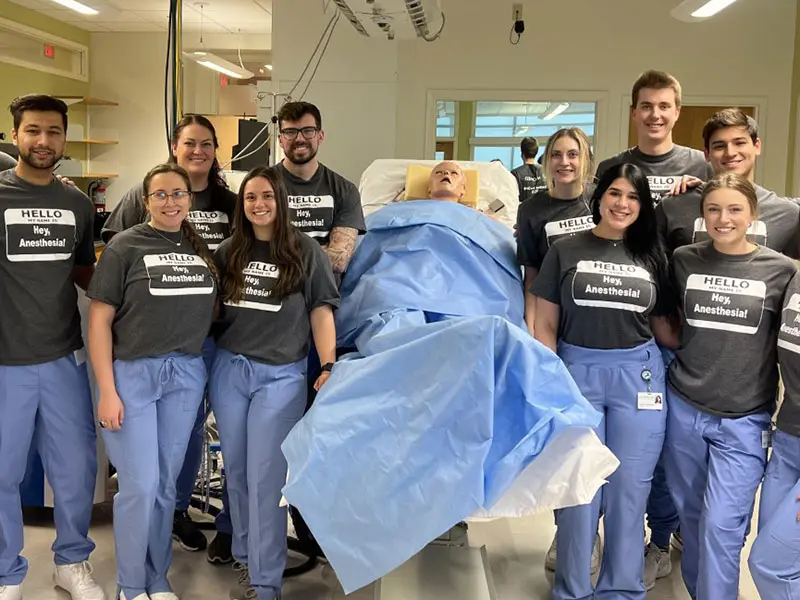
Earn your certified anesthesiologist assistant degree at NEOMED
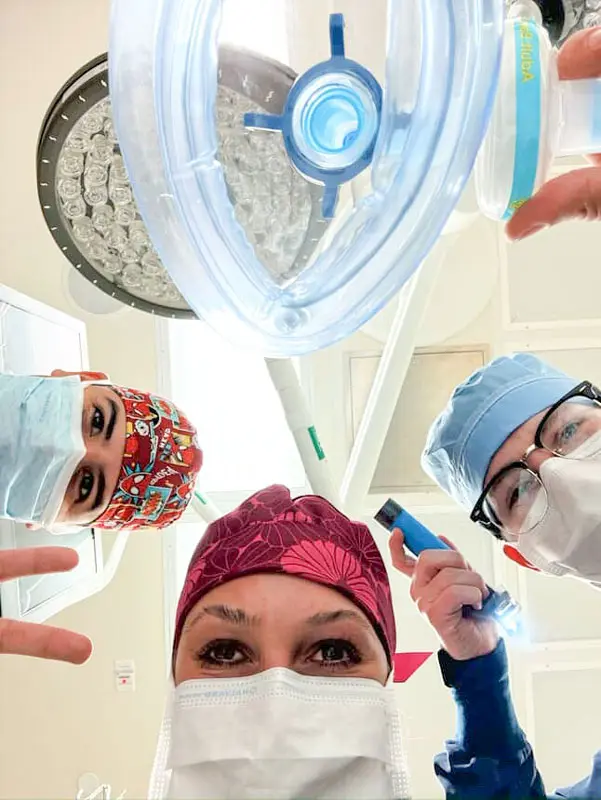 The Master of Medical Science in Anesthesia (M.M.Sc.A.) program at NEOMED prepares students for a rewarding career in anesthesiology, equipping them with the didactic, clinical and simulation training needed to deliver safe, patient-centered anesthetic care as a Certified Anesthesiologist Assistant (CAA).
Why choose a career as a CAA?
- Key role in anesthesia care: CAAs work alongside physician anesthesiologists as vital members of the anesthesia care team.
- High-demand profession: In Ohio, one physician anesthesiologist can supervise up to four CAAs, ensuring widespread career opportunities.
- Critical patient care: CAAs guide patients through the preoperative, intraoperative and postoperative stages of surgery, assisting some of the most vulnerable patients during high-risk medical procedures.
NEOMED’s Anesthesiologist Assistant Certification Program
Our M.M.Sc.A. program stands out with:
- High-fidelity simulation labs for hands-on training
- Innovative didactic curriculum tailored to real-world practice
- Extensive clinical experience to develop top-tier anesthesia skills
Whether you’re researching the best anesthesiologist assistant programs in Ohio or looking into requirements for an anesthesiologist assistant degree, NEOMED provides the education and experience to help you succeed.
Accredited
NEOMED’s Master of Medical Science in Anesthesia program is accredited by the Commission on Accreditation of Allied Health Education Programs upon the recommendation of the Accreditation Review Committee for the Anesthesiologist Assistant (ARC-AA).
9355 – 113th St. N, #7709
Seminole, FL 33775
727-2102350
👉 Admissions events for you
Webinar: Navigating the CAA Admissions Process
Join us for an informative admissions webinar designed to guide prospective applicants through every step of the application process. Whether you’re just getting started or finalizing your application, this session will provide valuable insights to help you submit a strong, competitive application.
CAA In-Person Virtual Open House
Join our Master of Medical Science in Anesthesia faculty and students for an immersive open house session designed for prospective graduate students interested in soaring into advanced anatomical sciences. This event will tour the academic landscape and simulation lab of our MMScA program, plus participate in dynamic Q&A with current students and faculty.
Application Timeline
Application Opens: March 10
Early Deadline: June 1
Final Deadline: August 1
Prerequisite Courses
See list below
Entry Term
Spring Semester
Delivery
In-Person
Program Length
28 months
Credit Hours
111 credits
Admissions requirements
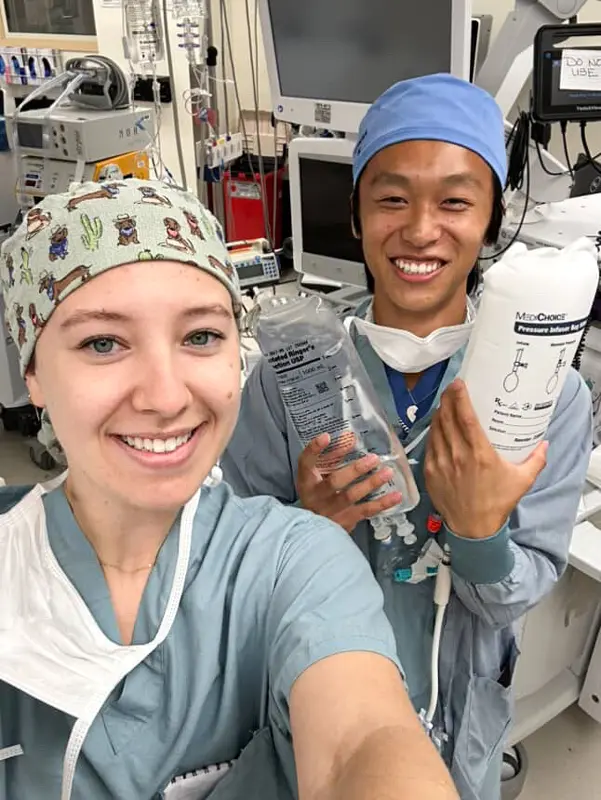 To be considered for admission, applicants must:
- Have earned a bachelor’s degree
- Have maintained a cumulative GPA (undergraduate/post-bacc/graduate) of at least a 3.2 (3.7 recommended) and a prerequisite course GPA of at least 3.2 (3.5 recommended)
- Have completed prerequisite coursework (listed below)
- Prerequisites can be in progress at the time of application so long as they will be completed by the time of potential program matriculation (January)
- Prerequisites may be completed through any accredited community college or online institution (Portage Learning, UCSD extension, etc.)
- Currently, there is no expiration for prerequisite coursework.
- Have taken the Medical College Admissions Test (MCAT) or the Graduate Record Exam (GRE) within five years of matriculation with an MCAT score greater than 490 or a GRE score of 150 (Verbal), 150 (Quantitative), 4.0 (Analytical).
- Have shadowed an anesthesia practitioner for a minimum of eight hours (or provided an explanation of why shadowing could not be completed this cycle). Express interest in shadowing an anesthesia practitioner | Form that documents your shadowing hours
- Complete the CASAA application for NEOMED
- Submit an updated curriculum vita (CV)/resume containing contact information, education, employment, scholarly activities, and licensure (if applicable)
- Submit official transcripts from all institutions that you have taken courses at. This includes both undergraduate and graduate courses.
- Submit three letters of recommendation
- Must be a U.S. citizen or permanent resident to be eligible to apply.
PREREQUISITE COURSES
Biology sequence (courses with labs)
- Semester Hours Required: 6
- Guidance: Students should take two courses in sequence, with an accompanying lab that may or may not be included with a course. Select from coursework required by science majors and students preparing for professional clinical schools. Students may supplement one of the Biology courses with an upper-level Biological Sciences course provided the laboratory component is included.
Chemistry sequence (courses with labs)
- Semester Hours Required: 6
- Guidance: Students should select the two courses that are required in the sequence. A lab is required with all courses and may or may not be included with the course. It is expected that students will select from coursework required of science majors or professional clinical school preparation such as pre-medicine study.
Organic chemistry sequence (courses with labs)
- Semester Hours Required: 6
- Guidance: Students should select the two courses that are required in the sequence. A lab is required with all courses and may or may not be included with the course. It is expected that students will select from coursework required of science majors or professional clinical school preparation such as pre-medicine study.
General physics sequence (courses with labs)
- Semester Hours Required: 6
- Guidance: Students may select either algebra-based physics or calculus-based physics courses. A lab is required with all courses and may or may not be included with the course. It is expected that students will select from coursework required of science majors or professional clinical school preparation such as pre-medicine study. Non-mathematics-based physics survey courses for non-science majors will not fulfill this competency.
Anatomy & physiology sequence (courses with labs)
- Semester Hours Required: 6
- Guidance: Students should seek out a two-semester comprehensive anatomy and physiology course sequence with laboratory experience. If a student’s school only has individual Anatomy courses and Physiology courses, it is required to take one of each with the accompanying laboratory sections.
Biochemistry course
- Semester Hours Required: 3
- Guidance: Students are expected to select the Biochemistry course that requires Organic Chemistry I and II as a prerequisite.
Calculus course
- Semester Hours Required: 3
- Guidance: There is no specific level of calculus course required. Any course listed in the Calculus area of study higher than pre-calculus will suffice. This may include Calculus for mathematics majors, business majors, engineering majors, etc. Calculus placement assumes a high-level mastery of college algebra content, essential to pharmacy success.
Statistics course
- Semester Hours Required: 3
- Guidance: Students should complete a statistics course that focuses on the basic understanding of descriptive statistics, statistical methods and how to perform and interpret basic statistical procedures. Elementary Statistics courses are acceptable.
English composition course
- Semester Hours Required: 3
- Guidance: In preparation for a career as a professional heath practitioner, all candidates must demonstrate excellent proficiency in all forms of English language-based communication, both verbal and written as evidenced by successful completion of an English composition one and two sequence. Literature courses that are not composition-based will not be accepted for this requirement.
Additional recommended courses
- Genetics
- Psychology
- Microbiology
- Physiology (second course of physiology recommended if combined A & P course was used for required prerequisites)
- Sociology
Frequently Asked Questions
Certified Anesthesiologist Assistants* are highly skilled healthcare professionals that work with physician anesthesiologists as part of the anesthesia care team to provide safe, patient-centered care of patients throughout various types of surgeries. CAAs work exclusively within the anesthesia care team model, as defined by the American Society of Anesthesiologists (ASA). All CAAs possess a premedical background, a baccalaureate degree, and must complete a comprehensive didactic and clinical program at the graduate school level. CAAs are trained extensively in the delivery and maintenance of quality anesthesia care as well as advanced patient monitoring techniques. The goal of CAA education is to guide the transformation of qualified student applicants into competent health care practitioners who aspire to practice in the anesthesia care team.
*Definition adapted from the American Academy of Anesthesiologist Assistants
- GPA: 3.76
- Prerequisite GPA: 3.74
- MCAT: 501
- GRE Writing: 4.5
- GRE Quantitative: 155
- GRE Verbal: 155
Certified Anesthesiologist Assistants* can work in any institution under a physician anesthesiologist in the anesthesia care team. The states CAAs practice is a dynamic and evolving situation, as multiple states are actively pursuing legislation to allow CAAs to practice in their states. CAAs can currently practice in 18 states and Guam, with Kansas passing legislation for practice in 2021.
*Definition adapted from the American Academy of Anesthesiologist Assistants
See current tuition and fees for the Certified Anesthesiologist Assistant program on our tuition and fees page. Look for the degree titled “MMS Anesthesia.”
The MMScA program is fast paced with a sheer volume of content that is often overwhelming. For these reasons, the MMScA program strongly discourages all students from engaging in any outside employment.
Essential functions
Program-Specific Essential Functions
Related: The program is in NEOMED’s College of Graduate Studies. See the college’s student essential functions.
Essential Functions for the Certified Anesthesiologist Assistant Program
A candidate should be able to perform in a reasonably independent manner without a trained intermediary. The use of a trained intermediary means that a candidate’s judgment must be mediated by someone else’s power of selection and observation.
Observation
- A candidate must be able to observe examinations and procedures in the clinical environment and be able to read test results such as electrocardiograms (EKG).
- A candidate must be able to observe a patient accurately at a distance and close at hand.
- A candidate must always remain fully alert and attentive in clinical settings and be able to evaluate patient signs and symptoms for the purpose of triaging patient complaints, monitoring therapeutic measures and treatments, eliciting patient information, describing changes in a patient’s mood, activity, posture, and perceive nonverbal communications.
Communication
- A candidate must be able to communicate effectively (in English) with both patients and member of the health care team.
- The candidate must be able to communicate effectively with all members of the healthcare team.
Motor
- A candidate must have sufficient motor function to assess patients using diagnostic maneuvers that comprise a physical examination.
- A candidate must be able to perform the basic and advanced clinical procedures that are the requirements of the program.
- A candidate must be able to execute motor activities required to provide general care, to perform diagnostic procedures and to provide emergency treatment to patients. Examples of emergency treatment and motor functions include but are not limited to: performing cardiopulmonary resuscitation/basic life support (CPR/BLS) and advanced cardiac life support (ACLS), intubation and administration of oxygen and anesthetic gasses, and starting intravenous lines and administering intravenous medications.
Intellectual-Conceptual, Integrative and Quantitative Abilities
- The candidate must be able to synthesize knowledge and integrate the relevant aspects of a patient’s history, objective and subjective findings, and surgical procedure to initiate and monitor appropriate anesthesia in a reasonable amount of time.
- The candidate must be able to comprehend three-dimensional relationships and to understand the spatial relationship of structures.
Behavioral and Social Attributes
- The candidate must be able to adapt to changing environments, display flexibility, and learn to function in the face of uncertainties and in situations of physical and emotional stress.
- The candidate must demonstrate ethical behavior and exercise good judgment in the completion of patient care responsibilities.
- The candidate must possess interpersonal skills that promote mature, sensitive, and effective relationships and interactions with patients, including compassion, integrity, motivation, empathy, and concern for others.
Program Outcomes
Attrition
| Graduation Year | Initial Enrollment | Voluntary Withdrawal | Separated |
|---|---|---|---|
| 2025 | 14 | 0 | 1 |
| 2024 | 12 | 0 | 0 |
Certification Exam Results
| Graduation Year | Examinees | First Attempt Pass | First Attempt Fail | Cumulative Pass | Cumulative Fail |
|---|---|---|---|---|---|
| 2025 | 13 | 13 | 0 | 13 | 0 |
| 2024 | 12 | 10 | 2 | 12 | 0 |
Employment
| Graduation Year | Graduated | Employed | Seeking Work |
|---|---|---|---|
| 2025 | 13 | 13 | 0 |
| 2024 | 12 | 12 | 0 |
NEWS
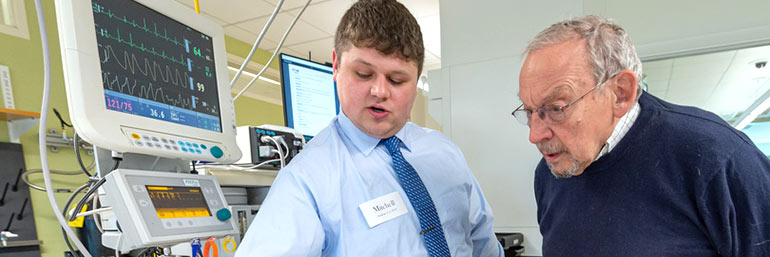 Certified Anesthesiologist Assistant Program Earns Accreditation
“We’re excited that current and future students can rest assured that NEOMED is committed to them as students, to the program and to the profession,” said program director Nathaniel Flath, CAA.
NEWS
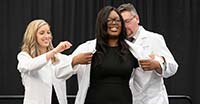 NEOMED’s First Master of Medical Science in Anesthesiology Class Celebrated With White Coat Ceremony
“It has been incredible to watch this first class create a culture that will set the foundation of success for this program,” said Nathanial Flath, CAA, program director, during the ceremony. “They have come together to form one family of future health care providers, each committed to ensuring family, not individual, success.”
Contact
College of Graduate Studies Admissions
The Graduate School at NEOMED
College of Graduate Studies degrees
College of Graduate Studies home

© 2024 Northeast Ohio Medical University
4209 St. Rt. 44, PO Box 95, Rootstown, Ohio 44272
ADA compliance | Consumer information | Title IX | Privacy statement | Do business with NEOMED