Prepare to lead data-driven change in healthcare

This new graduate program empowers clinicians, researchers and aspiring data scientists to improve health outcomes through analytics and innovation. The curriculum blends advanced coursework with hands-on learning in collaboration with top health systems and research institutes.

Request More Information

What you’ll gain:

  • Expert-led training in:
    • Health-focused data science
    • Artificial intelligence
    • Advanced analytics
  • Innovative coursework paired with real-world applications
  • Access to faculty who are active researchers and field leaders
  • Opportunities to collaborate on real health care challenges with health systems and research partners

Whether you’re already in the field or just starting out, the MS HDSA program equips you to lead transformative work in today’s data-powered health landscape.

Apply now via GradCAS!

A smiling healthcare researcher in navy scrubs sitting with arms crossed in a bright medical office.Program overview

This degree is perfect for:

  • Healthcare professionals who want to advance their knowledge and complement their health/medical backgrounds.
  • Traditional college students who are interested in pursuing health data science and AI as a profession.
  • Career changers entering the health tech field.

What you’ll learn:

  • Integrate data science, AI, and applications to improve health outcomes
  • Build skills in machine/deep learning, health informatics and biostatistics

Program format:

  • Blended (asynchronous online + NEOMED-based opportunities)
  • 30 credits | 1 year full-time | 4 years part-time
  • 10 credit Certificate option

Curriculum highlights:

Courses include…

  • Machine Learning and Deep Learning
  • Statistical Computing
  • EHR and Health Data
  • AI for Health Data
  • Statistical Methodology for Biomedical Sciences I & II
  • Data Visualization
  • Electives such as Epidemiology, Research Methods and more

Why choose NEOMED?

At NEOMED, students benefit from deep clinical integration with over 27 hospitals and research centers, gaining access to real-world health data and collaborative opportunities.

Our program is uniquely focused on applied health data science and AI, not generic technology nor abstract theory, ensuring relevance in today’s healthcare landscape.

Students will also have access to premier resources like the Ohio Supercomputer Center and NEOMED’s Clinical and Translational Research Institute (CTRI). Designed with flexibility in mind, the program supports both full-time students and working professionals seeking to advance their careers.

Career opportunities

Prepare for roles in academia, healthcare enterprises, pharma and biotech, insurance, and more:

  • Data scientist
  • Clinical AI engineer
  • Biomedical data analyst
  • Informatics consultant
  • Director in AI

Addressing the gap

Across the U.S. and Ohio, the healthcare sector is facing increasing pressure to improve health outcomes, reduce costs, and adapt to emerging technologies, all while managing massive volumes of patient data. Yet, there is a significant shortage of professionals trained to harness data and AI to drive innovation.

The MS HDSA program at NEOMED addresses this critical gap. By equipping students with advanced skills in data science, machine/deep learning and health analytics, the program prepares graduates to collaborate with leading institutions and companies to tackle real-world challenges that directly impact patient care and population health.

Job growth

Artificial intelligence is poised to drive significant job growth by creating new career opportunities across industries and transforming the skills needed for the future workforce.

The U.S. Bureau of Labor Statistics projects 36% growth in employment of Data Scientists nationwide from 2023 to 2033.

Across Ohio, data-driven roles are experiencing robust growth. Healthcare is the fastest growing industry in the state, expected to add more than 86,000 jobs by 2030, representing a 10.6% increase. Within that growth, positions requiring expertise in data science, analytics and AI are among the most in demand.

When will classes start?

We look forward to welcoming our first class of MS HDSA students in the fall of 2026.

Admissions requirements:

  • Bachelor’s degree with GPA ≥ 3.0
  • Basic courses in:
    • calculus, and
    • statistics or quantitative science
  • Introduction to programming language (R or Python) – preferred
  • Personal statement and references

Course descriptions

Core Courses

Statistical Computing (3)
This course introduces R and Python. It will give students an overview of these programming languages and provide fundamental grounding in these environments for accessing, structuring, formatting and manipulating data. Students will learn how to wrangle, summarize, and display data. Other topics include an introduction to high-performance computing, distributed computing, version control, and cloud computing.

Statistical Methodology for Biomedical Sciences I (3)
This course introduces foundational statistical methods for biomedical research using programming languages such as R. Students will gain practical experience with core topics such as sampling, probability, distributions, estimation, hypothesis testing, ANOVA, regression, and categorical data analysis. The course will use brief introductory overviews and examples of specialized applications relevant to biomedical and clinical research.

Statistical Methodology for Biomedical Sciences II (3)
This course teaches more nuanced statistical analysis tools for biomedical research using programming languages such as R. This course covers advanced regression topics, generalized linear models, generalized additive models, linear mixed models, splines and smoothing techniques, decision trees, and basic survival models. Health data will mainly be used in examples and the final project of the course. Prerequisite: Statistical Methodology for Biomedical Sciences I.

Machine Learning (3)
This course focuses on applications of machine learning to biomedical data through popular data mining and predictive modeling techniques. Students will be introduced to the basics of statistical/machine learning: supervised learning (e.g., linear models, nonlinear models, penalized methods, ensemble methods, etc.), and unsupervised learning (e.g., k-means clustering, nearest neighbors, hierarchical clustering, principal components analysis, etc.). Throughout the course, the student will learn how to apply methods, understand how those methods work, and their limitations.

Deep Learning (3)
This course covers the fundamental concepts of neural networks and will touch upon some of the basic mathematical underpinnings. Different network architectures like convolutional neural networks and recurrent neural networks will be studied. Practical implementation using popular software frameworks like TensorFlow and PyTorch will entail hands-on experience with applying deep learning techniques to real-world problems in health professions. Prerequisite: Machine Learning.

EHR and Health Data (3)
The course will introduce the real-world use of Electronic Health Records (EHR) in healthcare delivery. Students will learn the functionality of EHR, technical infrastructures required, understand how EHR change healthcare delivery workflows, best practice for analyzing EHR data, and data security-related issues critical to EHR implementation. This course also offers an overview of health and real-world biomedical data, including laboratory and clinical data from sensors, text, and other sources.

Artificial Intelligence for Health Data (3)
This course provides a basic introduction to the use of artificial intelligence (AI) in healthcare. The course is structured as a survey of different application areas in healtcare, such as diagnosis, decision support, treatment planning, documentation support, clinical research, mobile health, and medical education. Topics will introduce learners to the requirements of the particular healthcare area, describe how AI is being used to support this area, and suggest various opportunities for new uses. In addition, challenges and risks of employing AI in healthcare areas will be identified.

Data Visualization (3)
Introduces principles and techniques for creating effective interactive visualizations of categorical and numerical information and graphical exploratory data analysis. Primary topics include designing effective visualizations, implementing interactive visualizations using web-based frameworks, and communicating data-driven findings. We’ll also draw on biomedical data to demonstrate how visualization can motivate analysis and support data quality assessment.

Capstone (3)
This course is a capstone project experience under the guidance of a faculty mentor affiliated with the Clinical and Translational Research Institute. The project consists of an original written analysis and an oral presentation that addresses an applied health-related data science topic and advances existing skills and techniques in healthcare or public health. The project will also enhance the student’s communication skills and ethics training in a professional setting.

Directed Research for Non-Capstone Students (2-3)
This elective course offers master’s students the opportunity to earn research credit while actively developing the foundational skills needed to pursue health-related thesis research in data science and artificial intelligence. Designed to be taken alongside didactic coursework, the course emphasizes experiential learning through an in-person mentored research project. Under the guidance of an advisor, students will engage in the research process — from identifying research questions to analyzing data and communicating findings. The course prepares students to write their thesis.

Thesis for Non-Capstone Students (3)
This course has been developed to provide master’s degree candidates an opportunity to earn research credit under the in-person supervision of an advisor toward documenting their research results, performing data analyses, and scientific writing that will form the basis of their thesis work. This course is meant to be taken once the master’s degree candidate has successfully completed their didactic coursework. This course will be taken by the master’s degree candidate in the last semester before the thesis defense.

Electives

Responsible Conduct of Research (1)
Students will cultivate an awareness of the expanding imperative for structured education and applied training in research ethics and professional conduct. Graduate students, focusing their studies and careers in the medical, research, and technological sciences, are strongly encouraged to enroll in this course. Students will gain further knowledge about the history, structure, and organization of research. This course will guide students and fellows, as they progress through their graduate coursework/fellowships toward careers in medicine, science, and technology, toward a better understanding of core theories and values in professionalism and ethics as they apply to real-life experiences and situations.

Research Methods (3)
This course is designed to develop knowledge and skill in health-related research methods. Course content will primarily be discussion of design, strengths, weaknesses, and application of various types of research trials. Additional content will include an overview of key biostatistical concepts relevant to related research, ethical considerations in research, and strategies for disseminating the results of research. Learning strategies will include online lectures, required readings and discussion forums of key concepts and assignments. Real world examples of research will be provided by course instructors to facilitate discussion. The application of concepts learned will also be applied through completion of a longitudinal project beginning with an observation and culminating in the development and presentation of a study protocol.

Epidemiology (3)
This course introduces epidemiologic methods, terminology, concepts, and application to health research. Students will explore the principles of disease frequency, causal inference, and the use of statistical methods to analyze health data. Topics include experimental and observational study designs, survival analysis, time-series analysis, sample size calculation, power, effect size, and statistical methods for controlling confounding factors and determining effect modification. Emphasis will be placed on conceptual understanding which will be used to drive methodological choices and the interpretation and presentation of results.

How to apply

We use the GradCAS, the Centralized Application Service. Application deadline is July 15.

Apply via GradCAS

Stay informed

Want to learn more? Complete the interest form below and we’ll keep you apprised of developments!

Keep me informed

Program director

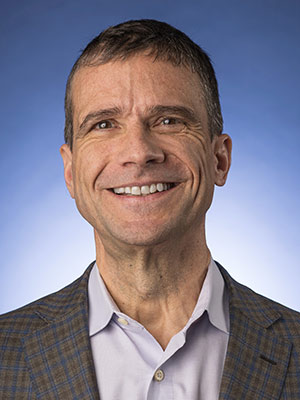
Philip Turk, Ph.D., M.S., is the program director at the Clinical and Translational Research Institute at NEOMED. He can be reached at pturk@380cebbe0d.nxcli.io.

The exterior of NEOMED on a sunny day.

About NEOMED

Located in Greater Cleveland, Northeast Ohio Medical University offers Doctor of Medicine (M.D.), Doctor of Dental Surgery (D.D.S.) and Doctor of Pharmacy (Pharm.D.) degrees, as well as master’s and doctoral degrees and research opportunities in other medical and life science areas.

NEOMED has an extensive research portfolio, with concentrations on mental health services, metabolic diseases, hearing and cardiovascular disorders, musculoskeletal conditions and neurodegenerative diseases.

Contact

College of Graduate Studies Admissions